- Mar 17
REFLEXIVE PRONOUNS
- newspeak
- 0 comments
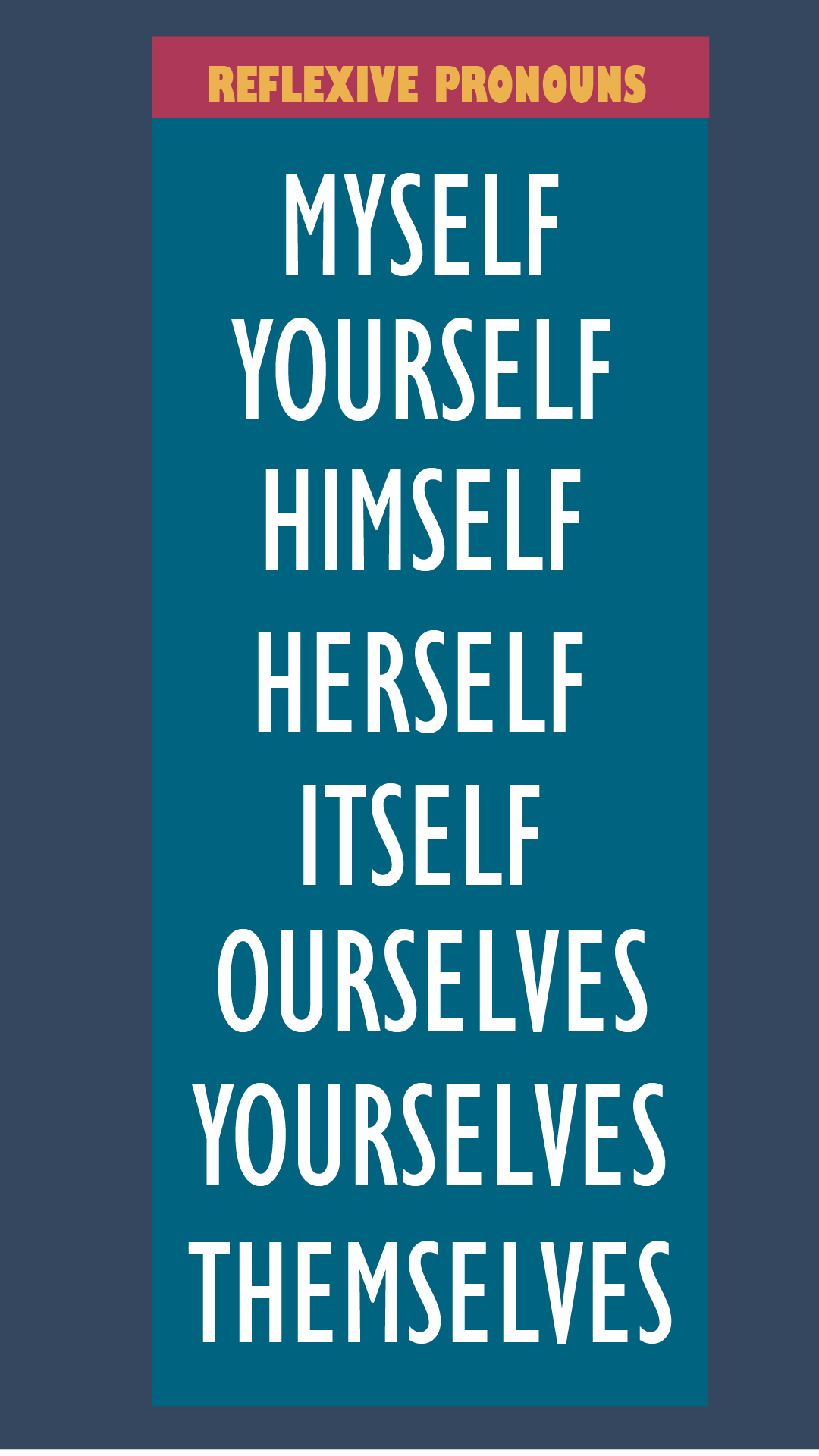
Reflexive pronouns (myself, yourself, himself, herself, itself, ourselves, yourselves, themselves) are used in several common situations.
First, they are used when the subject and the object are the same person (She cut herself).
Second, they appear in expressions like by oneself, meaning alone (He did it by himself).
Third, they emphasize that someone personally performed an action, often contrasting with having someone else do it (I repaired it myself vs. I had it repaired).
They can also add emphasis to a noun (the president himself, Saint Patrick himself).
Finally, they appear in common expressions such as enjoy yourself, help yourself, or behave yourself.
FORMULA
1. Subject and Object Are the Same
Subject + Verb + Reflexive Pronoun
Examples
She cut herself.
I blamed myself.
They prepared themselves for the exam.
2. Doing Something Alone
Subject + Verb + by + Reflexive Pronoun
Examples
She lives by herself.
The child stayed by himself.
I solved the problem by myself.
3. Emphasis (Not Someone Else)
Subject + Verb + Object + Reflexive Pronoun
Examples
I built the website myself.
She wrote the report herself.
They organized the event themselves.
4. Reflexive Pronoun After a Noun (Emphasis)
Noun + Reflexive Pronoun
Examples
The president himself signed the document.
The chef himself served the dish.
The parades are as Irish as Saint Patrick himself.
5. Common Expressions
ExpressionMeaningenjoy yourselfhave a good timehelp yourselftake something freelybehave yourselfact properlymake yourself at homefeel comfortable
Examples
Enjoy yourselves at the party.
Please help yourself to some coffee.
The children should behave themselves.